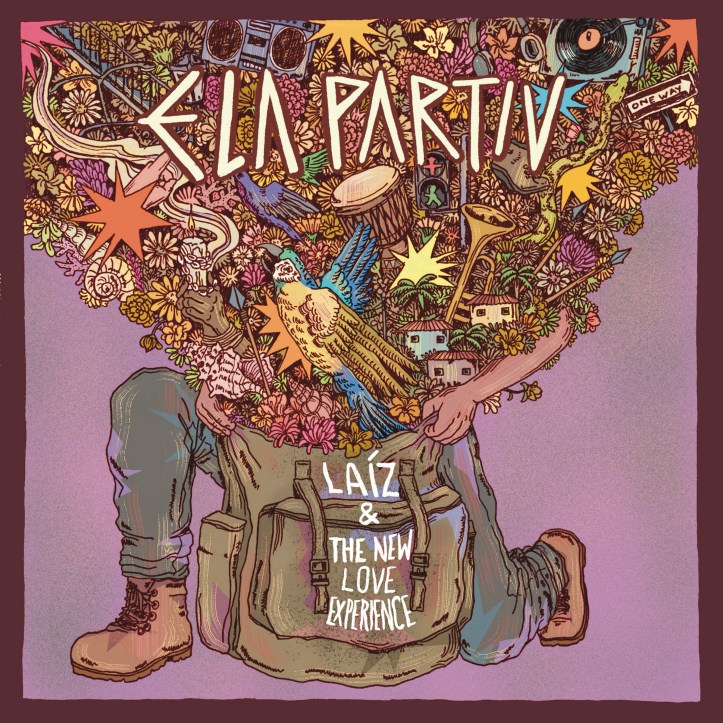
This is a multi-genre inspired hip-hop album – with socially conscious inspirations – fused with musical reference points from around the world, meet Laiz & The New Love Experience. Their new single is out today entitled Mena.
This final single and video features Jembaa Groove’s Eric Owusu – bridging topics around love, sexuality – and is about someone coming to terms with being gay, with the catholic church always ominous in the background
All of the lyricism and music from the forthcoming album are rooted in Laiz’s love and appreciation of the Tropicália movement and Brazilian music old and new – but tracks on Ela Partiu also feature Sudanese trap-rapper Zeyo Mann, as well as Ghanian percussionist and singer Owusu (who has also played with Pat Thomas).
Think music inspired by Tom Zé and Marcelo D2 – with musical expressions from Cuba, Algeria, Brazil, Colombia, Germany, Australia, South Africa, Ivory Coast, Ghana, Sudan, Peru, USA and Madagascar.
“The origins of every Brazilian is very foggy. Culture can aide you on your path” Laiz

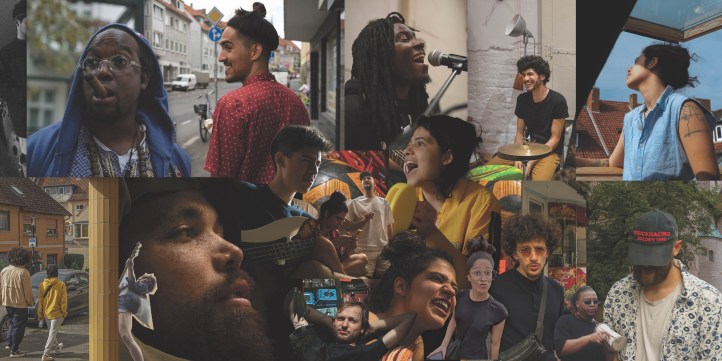
Laiz lyrically reflects on emigration and the songs are drawn from various experiences, some complex, since leaving her Sao Paulo home at just 14 years old, going to the States, and relocating to Germany in 2018 – as well as those experiences of the international guest musicians. Alongside Laiz, there is a roll-call of artists from Germany’s evolving hip-hop, soul, jazz and global music scenes on this LP.
Many are global south artists (or the global majority), defined as emigrants and who call Germany their home. The recording was brought to life in Laiz’s relaxed city of Hildesheim in 2023, at a studio come creative-community drop-in centre. Artists could stay for a few hours or a few days, living side by side, eating ice cream and helping craft a record that discusses topics concerning colonisation, exodus and diaspora.
The album title in Portuguese, Ela Partiu is the name of a classic track by Brazilian soulman, Tim Maia, who is one of Laiz’s heroes. It also translates to ‘she has gone’ referring to Laiz’s early-life decision to leave her family home, unable to adapt to a life as a Jehovah’s Witness, from a city in the state of Sao Paulo.
It’s not your typical Brazilian musician, finding their musical self, inspired by carnival rhythms diffused from the street. The teenage Laiz’s relationship to music was very different to this stereotype, as music was not prohibited in Laiz’s house and life, it had to fit within the limits of a strict and conservative Jehova house.
Music was only allowed that didn’t crossover spiritual or ungodly red lines.
Laiz found hip-hop, German hip hop in Berlin when she arrived around a decade ago, which then resulted in a reflection on Brazil. This was the beginning of a musical and personal revolution. She uncovered artists like the Brazilian beatsmith Marcelo D2, who reignited samba traditions through hip hop and poetry. Laiz also credits Tom Zé’s much revered recording, Estudando do samba, from 1976, as a key influence for Ela Partiu.
Nowadays, Laiz also namechecks UK luminaries, such as Little Simz and Sampha The Great, as modern day musical greats.

With the album release taking an alternative path in its release strategy, with a new single from the 14 track album having been dropped on digital platforms every fortnight, the first song given a full radio release was Carcará, with tongue in cheek, a samba swag, and a story of the ‘Brazilian smile’.
Laiz explains that the ‘Brazilaian smile’ [is] “this mystical place that cannot be found on a map, but in the guts of a good lover”. But she turns that around insisting “we ain’t Disneyland. And reality always comes hurling back” and sings “the skin shows you the price of Brazilian smiles”, signaling to “one of the most brutal and structurally racist systems in the world”.

Ela Partiu is one minute head nodding grooves, and next dancefloor mode. Sudanese rapper Zeyo Mann’s vocal delivery (in Arabic) has many parallels with the DIY baile funk music scene.
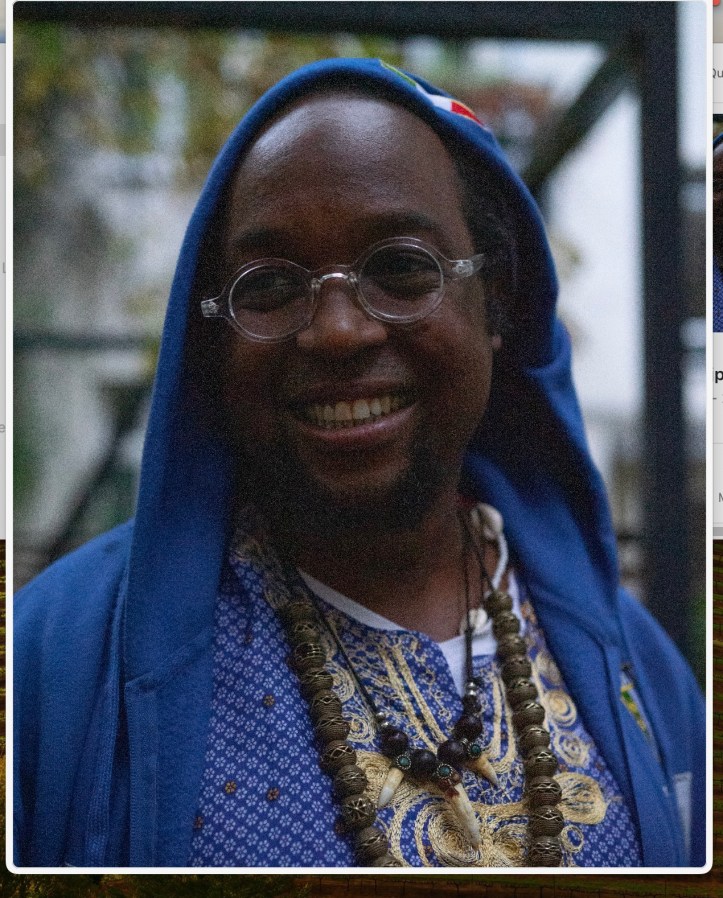
Elsewhere on the album, Trimegistus is a percussive jam, led by Owusu, someone who has been integral to this recording, featuring on almost all tracks with his conga or his soulful and familiar, vocal. Tipo Assim takes an old skool funk vibe, opening to a delicious groove and with Laiz supported by Ivorian singer VOVA.
For more head to their Instagram
 WORLD TREASURES MUSIC